
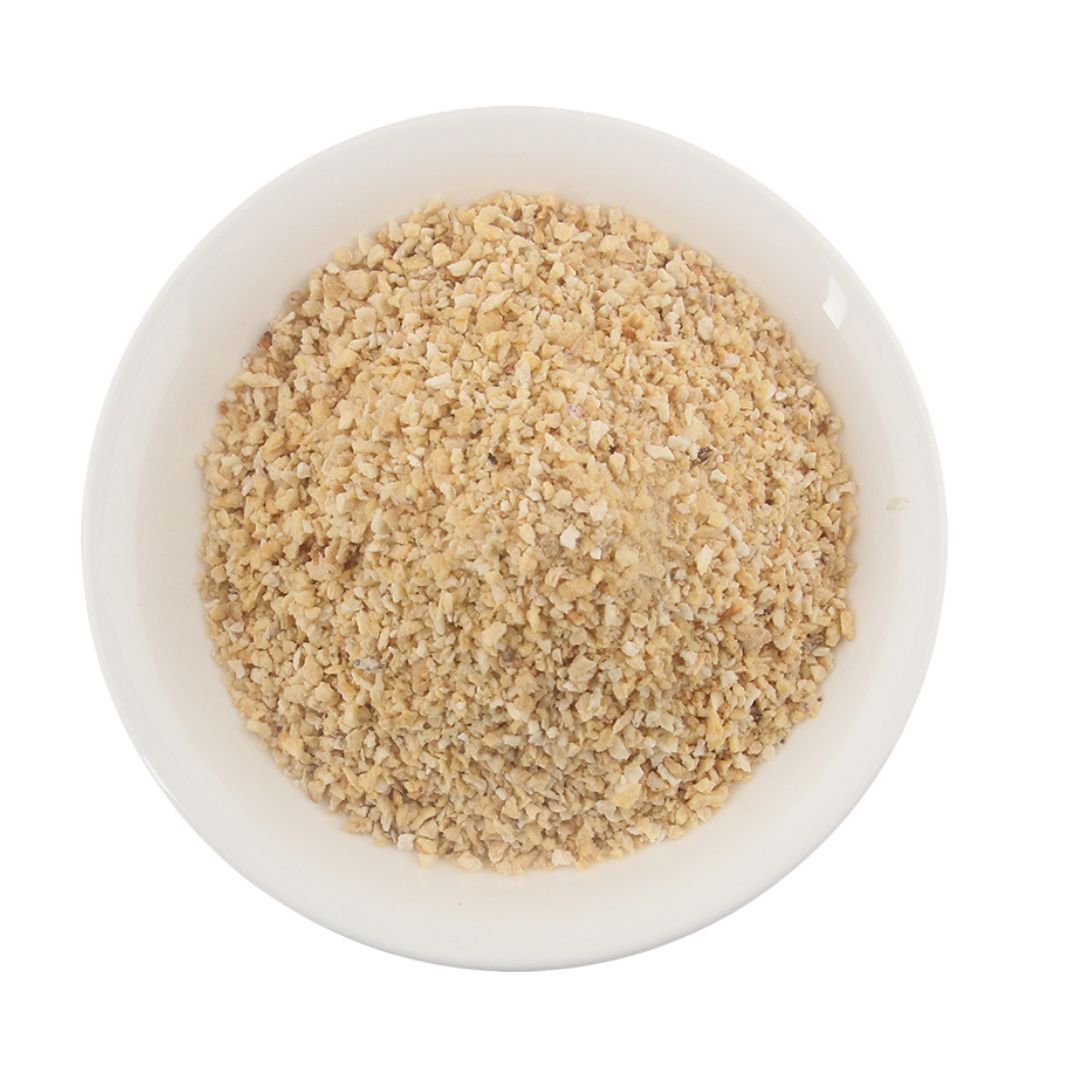


Product Introduction
Freeze-dried banana crumbles offer a convenient way to enjoy the taste and nutritional benefits of fresh bananas, without the need for preservation methods like refrigeration. These crumbles retain much of the original fruit's flavor, color, and nutrients, making them a versatile ingredient for various applications. The freeze-drying process ensures a long shelf life and easy storage, perfect for on-the-go consumption or as a pantry staple.
Production Process
The production of freeze-dried banana crumbles begins with selecting ripe, high-quality bananas. These bananas are then peeled, sliced, and quickly frozen. The frozen banana slices are placed in a freeze-drying chamber, where the moisture is removed through a process called sublimation. Sublimation involves converting the ice directly into vapor under low pressure. After the freeze-drying process is complete, the banana slices are broken into smaller, irregular pieces, resulting in the final crumble form. This method preserves the banana's natural sugars and reduces moisture content, preventing spoilage and maintaining its nutritional profile [1].
Nutritional Composition Table
| Nutrient | Amount per 100g |
|---|---|
| Calories | 350-380 |
| Total Fat | 1-2g |
| Saturated Fat | Less than 1g |
| Cholesterol | 0mg |
| Sodium | Less than 10mg |
| Total Carbohydrate | 80-90g |
| Dietary Fiber | 7-10g |
| Sugars | 40-50g |
| Protein | 4-5g |
| Potassium | 1500-1800mg |
| Vitamin B6 | 0.4-0.6mg |
| Vitamin C | 8-10mg |
Note: Nutritional values may vary based on the specific banana variety and processing conditions.
Product Benefits and Functions
Freeze-dried banana crumbles retain many of the nutritional benefits of fresh bananas. They are a good source of potassium, an essential mineral that helps regulate blood pressure and supports heart health [2]. The dietary fiber in bananas promotes digestive health and helps maintain stable blood sugar levels [3]. Additionally, bananas contain vitamin B6, which is important for brain development and immune function, and vitamin C, an antioxidant that protects the body against damage from free radicals [4, 5]. Freeze-dried banana crumbles offer a convenient way to incorporate these nutrients into one's diet, whether as a snack or an ingredient in other recipes.
Product Application Scenarios
Freeze-dried banana crumbles are highly versatile and can be used in various applications. They can be eaten as a standalone snack, offering a quick and healthy energy boost. In baking, they add a natural sweetness and banana flavor to muffins, cakes, and cookies. As a topping, they enhance the taste and texture of cereals, yogurt, and oatmeal. They can also be incorporated into smoothies and shakes for added nutrients and flavor. The crumbles are especially useful for outdoor activities like hiking and camping, where lightweight and non-perishable food options are essential.
Botanical Source
Bananas belong to the Musa genus, part of the Musaceae family. The most common type of banana comes from Musa acuminata and Musa balbisiana. The banana plant is a large perennial herb, though it may appear like a tree, with its leaves forming a pseudostem. Bananas are native to Southeast Asia and are now grown in many tropical and subtropical regions worldwide [6]. These fruits are valued for their sweet taste, nutritional content, and versatility in culinary applications.
Packaging and Storage
Freeze-dried banana crumbles are typically packaged in airtight, resealable bags or containers to prevent moisture absorption and maintain their crisp texture. Proper storage is important to preserve their quality and extend their shelf life. It is recommended to store the crumbles in a cool, dry place away from direct sunlight and heat. If stored correctly, freeze-dried banana crumbles can maintain their quality for up to 12-18 months. Once opened, the package should be resealed tightly to prevent the crumbles from becoming soft or losing their flavor.
Citations:
[1] Ratti, M. (2008). Advances in food dehydration. CRC press.
[2] Weaver, C. M. (2013). Potassium and health. Advances in Nutrition, 4(3), 368S-377S.*
[3] Anderson, J. W., et al. (1998). Health implications of dietary fiber. Nutrition Reviews, 56(1), 1-18.*
[4] Dakik, P., et al. (2022). Vitamin B6. In StatPearls [Internet]. StatPearls Publishing.
[5] Pullar, J. M., et al. (2018). The roles of vitamin C in skin health. Nutrients, 10(11), 1559.*
[6] Simmonds, N. W. (1966). Bananas. Longmans, Green and Co.

As a sales manager, I’m here to make sure you get exactly what you need for your dietary supplements. From sourcing to delivery, I’m always by your side, ensuring smooth and friendly service. Let’s make your products even better! 🥰🌿



