

Product Introduction
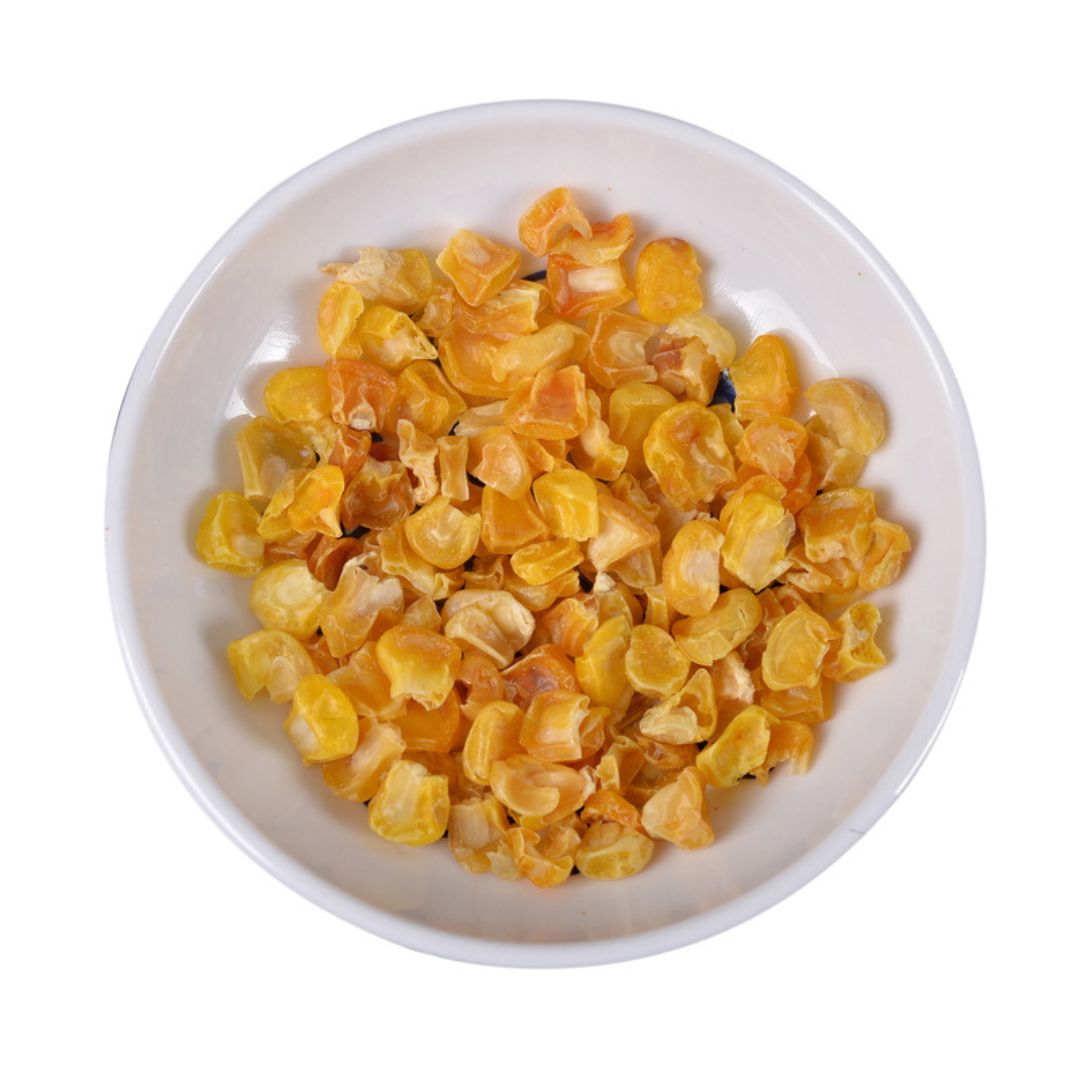
Dehydrated corn kernels are a preserved form of sweet corn, where most of the water content has been removed to extend shelf life and concentrate flavor. The dehydration process effectively reduces moisture levels, inhibiting microbial growth, and enzymatic activity, thus preventing spoilage and maintaining product quality [1]. This process makes it suitable for long-term storage, simplifying inventory management, and allows usage without the need for thawing or extensive preparation. These kernels can be rehydrated for use or added directly to recipes for added nutritional value.
Production Process
The production of dehydrated corn kernels begins with the selection of high-quality, mature sweet corn. Harvesting occurs when the corn reaches optimal sweetness and moisture content. The kernels are then removed from the cob through shelling, a process that separates the kernels. After shelling, the corn kernels undergo a cleaning and blanching phase to ensure quality and prepare them for dehydration [2]. Blanching involves briefly exposing the kernels to hot water or steam to inactivate enzymes that could cause discoloration or off-flavors during storage.
Following cleaning and blanching, the kernels are dehydrated using methods such as hot air drying, or freeze-drying. Hot air drying involves circulating hot air until the kernels reach the desired moisture content and removes moisture in a relatively short period of time. Freeze-drying, on the other hand, freezes the kernels before placing them under a vacuum to sublimate the ice crystals, preserving flavor and texture by removing moisture from frozen corn [3]. After dehydration, the kernels are sorted, inspected, and packaged to maintain quality.
Product Applications
Dehydrated corn kernels are versatile, and can be utilized in various culinary applications, adding both texture, and nutritional value. In soups, and stews, they contribute a subtle sweetness, and a satisfying bite, rehydrating during the cooking process. As a side dish, dehydrated corn offers a convenient alternative, to fresh, or frozen corn, and can be seasoned to complement a range of flavors. Snacks, such as trail mixes, can benefit from the addition of dehydrated corn kernels, providing a crunchy element, paired with nuts or seeds.
Furthermore, the food industry incorporates dehydrated corn into ready-to-eat meals, and processed foods, to enhance taste, and extend shelf life [4]. The baking sector uses dehydrated corn flour, derived from the kernels, to create gluten-free products, or add unique flavors to traditional recipes. Thus, its application extends from home cooking, to large-scale food manufacturing, illustrating its adaptability, and widespread appeal.
Packaging and Storage
Packaging and storage are important to maintaining the quality, and extending the shelf life of dehydrated corn kernels. The packaging material should act as a barrier against moisture, oxygen, and light, so common packaging materials include airtight plastic bags, or containers, metal cans, or glass jars [5]. Vacuum sealing is often employed to further reduce oxygen exposure, preventing oxidation, and preserving flavor.
Storage conditions also play a role in maintaining the product’s integrity. Dehydrated corn kernels should be stored in a cool, dry place, away from direct sunlight. High temperatures and humidity can compromise the product’s quality, leading to spoilage, or loss of flavor [6]. Proper packaging, combined with appropriate storage conditions, ensures that the dehydrated corn kernels retain their taste, texture, and nutritional value, for an extended period.
Citations
[1] Fellows, P.J. (2009). Food Processing Technology: Principles and Practice. Woodhead Publishing.
[2] Lund, B.M., Baird, D., & Gould, G.W. (Eds.). (2000). The Microbiological Safety and Quality of Food. Aspen Publishers.
[3] Ratti, C. (2001). Texture Properties of Freeze-Dried Foods. Drying Technology, 19(1), 1-24.
[4] Rahman, M.S. (Ed.). (2007). Handbook of Food Preservation (2nd ed.). CRC Press.
[5] Marsh, K., & Bugusu, B. (2007). Food Packaging—Roles, Materials, and Environmental Issues. Journal of Food Science, 72(3), R39-R55.
[6] Singh, A., & Singh, R.P. (2015). Handbook of Food Packaging: Materials, Processes and Technology (2nd ed.). CRC Press.

As a sales manager, I’m here to make sure you get exactly what you need for your dietary supplements. From sourcing to delivery, I’m always by your side, ensuring smooth and friendly service. Let’s make your products even better! 🥰🌿