
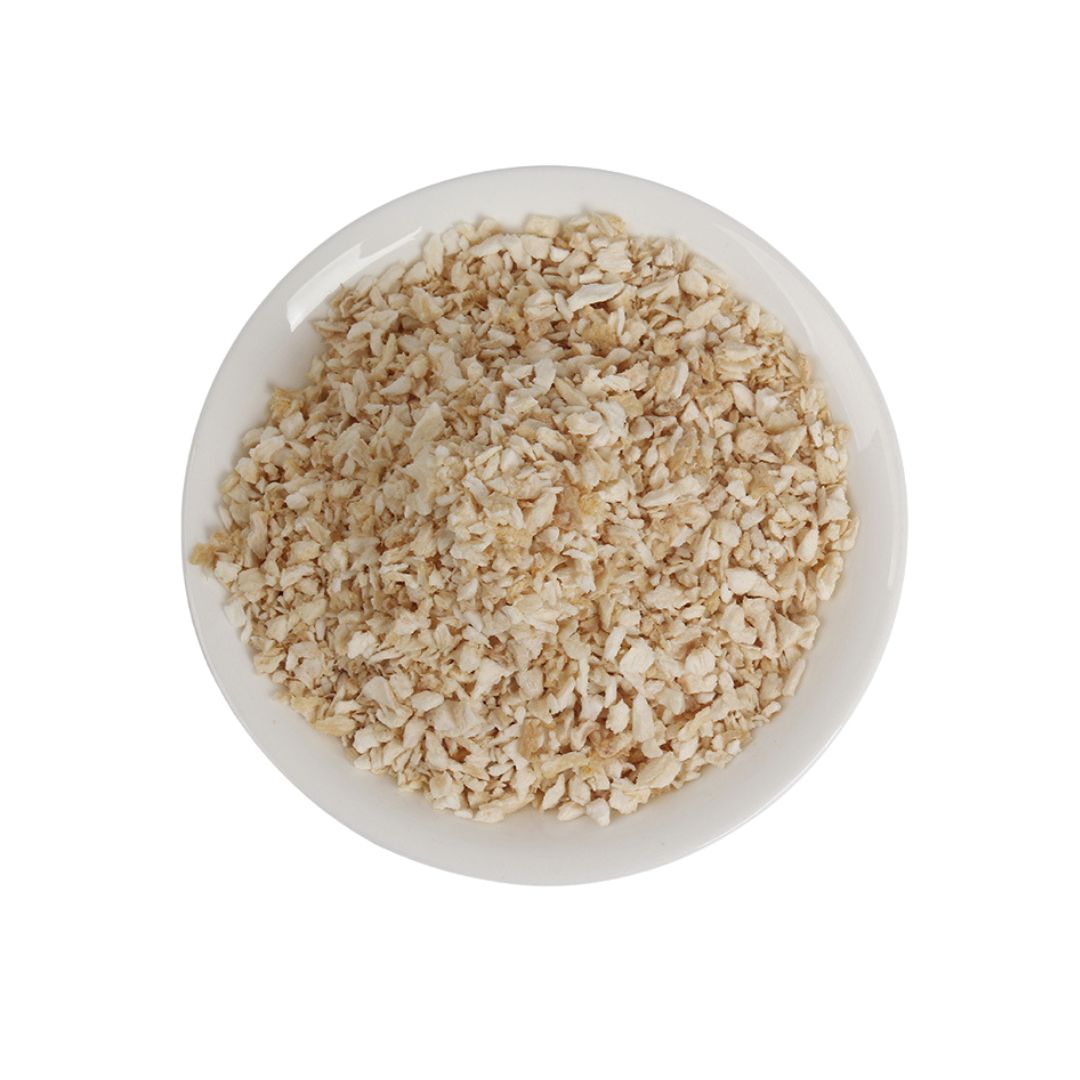


Product Introduction
Freeze-dried pineapple crumbles offer a convenient way to enjoy the tropical flavor and nutritional benefits of pineapple in a shelf-stable form. This product transforms fresh pineapples into lightweight, crispy pieces through a process that preserves their natural sweetness and nutrients. Freeze-dried pineapple crumbles can serve as a versatile ingredient, suitable for a variety of culinary applications.
Production Process
The production of freeze-dried pineapple crumbles begins with selecting ripe, high-quality pineapples. The pineapples are then washed, peeled, and cored before being cut into small, uniform pieces. These pineapple pieces are then rapidly frozen to a very low temperature. After freezing, the pineapple pieces undergo a sublimation process in a vacuum chamber, where the ice crystals are converted directly into vapor, bypassing the liquid phase. This process removes the majority of the moisture while retaining the pineapple's original structure and nutritional content. Finally, the freeze-dried pineapple is inspected, sorted, and packaged to ensure product quality.
Nutritional Composition Table
The nutritional composition of freeze-dried pineapple crumbles can vary slightly depending on factors such as the pineapple variety and processing methods. However, a typical nutritional profile per 100g serving is as follows:
| Nutrient | Amount |
|---|---|
| Calories | 350 kcal |
| Carbohydrates | 85 g |
| Fiber | 10 g |
| Sugars | 70 g |
| Protein | 3 g |
| Fat | 1 g |
| Vitamin C | 90 mg |
| Manganese | 2 mg |
Product Benefits and Functions
Freeze-dried pineapple crumbles provide several health benefits, primarily due to their high vitamin C and bromelain content. Vitamin C is a powerful antioxidant that supports immune function and helps protect the body against oxidative stress [1]. Bromelain, an enzyme found in pineapple, aids digestion by breaking down proteins and reducing inflammation [2]. The dietary fiber in pineapple crumbles promotes gut health and can help regulate blood sugar levels [3]. Additionally, the manganese content contributes to bone health and metabolic functions [4].
Product Application Scenarios
Freeze-dried pineapple crumbles are incredibly versatile and can be used in numerous ways. They make an excellent addition to breakfast cereals, granola, and yogurt, adding a burst of tropical flavor and a satisfying crunch. In baking, they can be incorporated into muffins, cakes, and cookies, providing a natural sweetness and chewy texture. They are also a great snack on their own or mixed with nuts and seeds for a healthy trail mix. Furthermore, freeze-dried pineapple crumbles can be rehydrated and used in smoothies, sauces, and desserts, offering a convenient alternative to fresh pineapple.
Botanical Source
The pineapple (Ananas comosus) is a tropical plant native to South America, belonging to the Bromeliaceae family [5]. It is characterized by its distinctive fruit, which is a multiple fruit formed from the fusion of individual fruit-producing flowers. The pineapple plant is a perennial herb that grows to about 1 to 1.5 meters in height, with tough, waxy leaves arranged in a spiral around a central stem. Today, pineapples are cultivated in many tropical and subtropical regions around the world, with major producers including Costa Rica, the Philippines, and Brazil [6].
Packaging and Storage
Freeze-dried pineapple crumbles should be packaged in airtight, moisture-proof containers to maintain their quality and prevent rehydration. Optimal storage conditions include a cool, dry place away from direct sunlight and heat. When stored properly, freeze-dried pineapple crumbles can have a shelf life of up to 12-18 months [7].
Citations:
[1] Lobo, V., Patil, A., Phatak, A., & Chandra, N. (2010). Free radicals, antioxidants and functional foods: Impact on human health. Pharmacognosy Reviews, 4(8), 118–126.
[2] Pavan, R., Jain, S., Shraddha, S., & Kumar, A. (2012). Properties and therapeutic application of bromelain. Biotechnology Research International, 2012, 976203.
[3] Anderson, J. W., et al. (1998). Health implications of dietary fiber. Nutrition Reviews, 56(1), 1-18.
[4] Keen, C. L., Ensunsa, J. L., & Watson, R. R. (1999). Manganese. In Handbook of nutritionally essential mineral elements (pp. 171-185). Academic Press.
[5] Bartholomew, D. P., Paull, R. E., & Rohrbach, K. G. (2003). The Pineapple: Botany, Production, and Uses. CABI Publishing.
[6] Food and Agriculture Organization of the United Nations. (n.d.). FAOSTAT. Retrieved from http://www.fao.org/faostat/en/
[7] Ratti, C. (2001). Advances in food dehydration. Trends in Food Science & Technology, 12(8), 288-296.

As a sales manager, I’m here to make sure you get exactly what you need for your dietary supplements. From sourcing to delivery, I’m always by your side, ensuring smooth and friendly service. Let’s make your products even better! 🥰🌿



