

Product Introduction
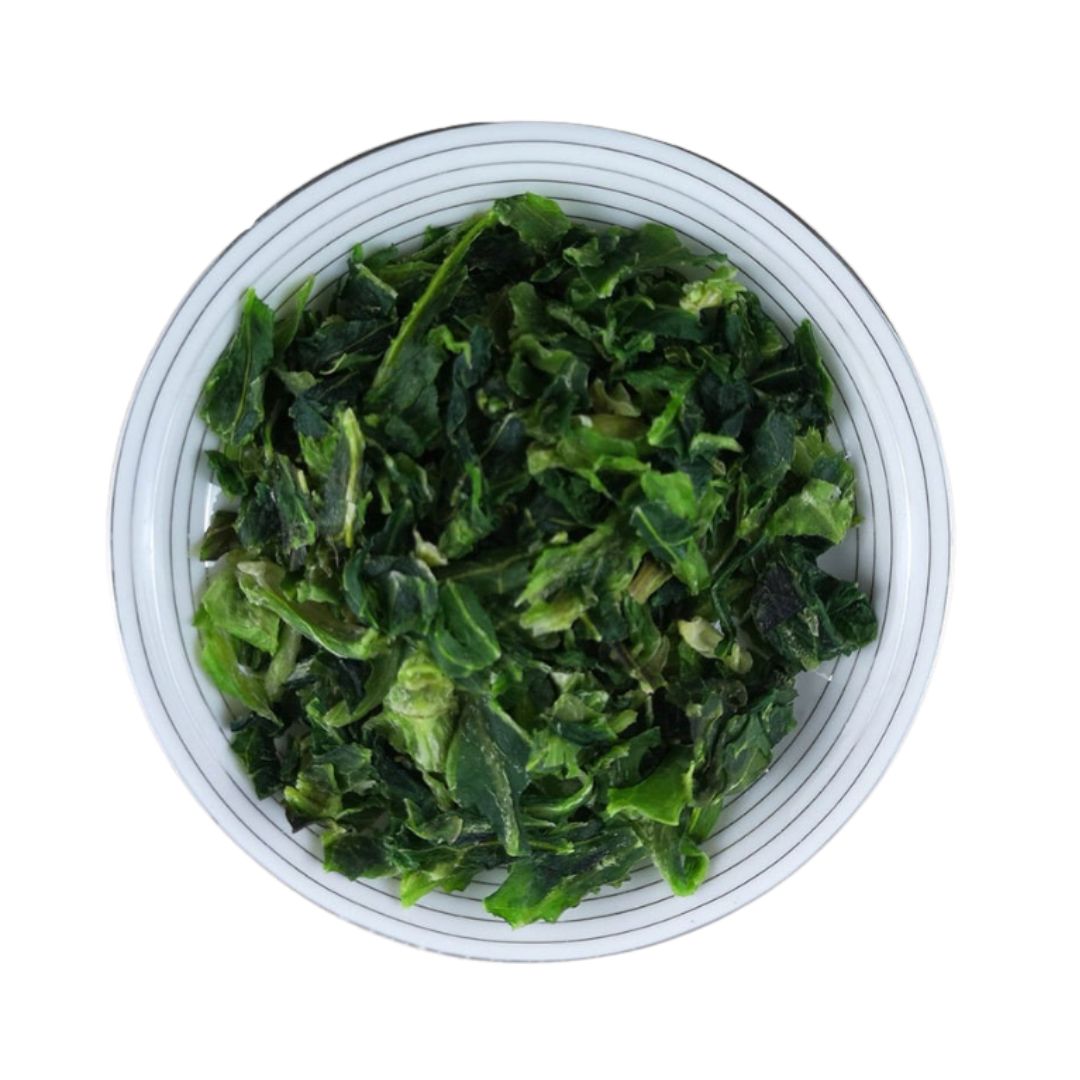
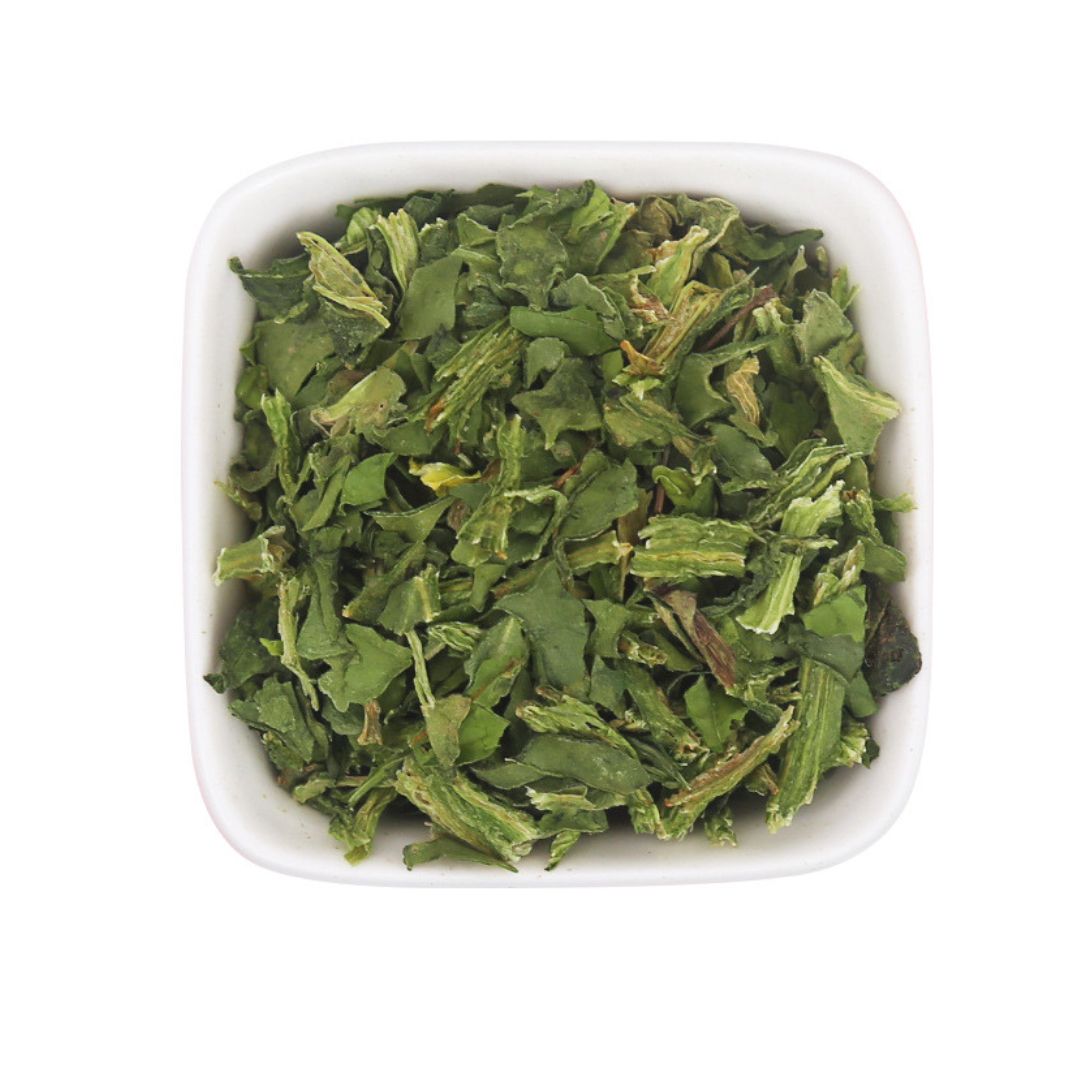
Dehydrated spinach leaves are produced from fresh spinach, a widely cultivated leafy green known for its nutritional benefits. Spinach, Spinacia oleracea, is native to Persia. It is now grown worldwide [1]. Dehydration preserves the spinach, reducing moisture content, which inhibits microbial growth and enzymatic activity, and extends shelf life. This process ensures that the spinach retains much of its original nutritional value [2].
Production Process
The production of dehydrated spinach leaves begins with the selection of fresh spinach. Upon arrival at the processing facility, the spinach undergoes rigorous quality checks to ensure it meets the required standards for color, texture, and absence of defects. The spinach leaves are thoroughly washed to remove any soil, debris, or contaminants. This washing process typically involves multiple stages, including immersion and rinsing under high-pressure sprays, so the cleanliness is guaranteed.
After washing, the spinach leaves are blanched, a crucial step that involves briefly immersing the leaves in hot water or steam at around 70-90°C. Blanching deactivates enzymes that could cause degradation of color, flavor, and nutritional content during storage. The blanched spinach leaves are then dehydrated using hot air dryers, where they are spread in a thin layer on perforated trays and exposed to a stream of warm air which removes moisture until the leaves reach a moisture content of around 5-7%.
Once dried, the spinach leaves are inspected to ensure they meet the required quality standards for color, size, and moisture content, and any substandard material is removed. The dried spinach leaves are then milled or flaked to the desired size. Finally, the dehydrated spinach leaves are packaged in moisture-proof containers.
Product Applications
Dehydrated spinach leaves are an ingredient with versatility in culinary applications. They can be rehydrated and added to soups, stews, and casseroles, where they seamlessly blend, adding a boost of nutrients. In baked goods like bread, muffins, and quiches, dehydrated spinach offers a subtle, earthy flavor and a boost of vitamins and minerals without altering the texture significantly [3]. Furthermore, these leaves can be ground into a fine powder and incorporated into smoothies, green juices, and protein shakes. Dehydrated spinach is also a suitable ingredient for instant noodle products where convenience and nutritional value are both important.
Packaging and Storage
Dehydrated spinach leaves are typically packaged in multi-layer, moisture-proof bags. These bags often include a polyethylene (PE) inner layer, an aluminum foil middle layer for barrier properties, and a paper or polyester (PET) outer layer for strength. Packaging sizes range from small, resealable pouches for household use to large, bulk containers for food manufacturers.
Optimal storage conditions are essential for maintaining the quality of dehydrated spinach leaves. The product should be stored in a cool, dry place, away from direct sunlight and heat sources, to minimize moisture absorption and prevent degradation of color and flavor. Under these conditions, dehydrated spinach leaves can maintain their quality for up to 12 months.
Citations:
[1] USDA FoodData Central. (n.d.). Spinach, raw. Fdc.nal.usda.gov.
[2] Ratti, C. (2001). Hot air and freeze-drying of high-value foods: a review. Journal of Food Engineering, 49(4), 311–319.
[3] Zhang, M., Tang, J., Mujumdar, A. S., Wang, S., & Gao, Z. (2006). Trends in microwave-related drying of foods. Trends in Food Science & Technology, 17(10), 524–534.

As a sales manager, I’m here to make sure you get exactly what you need for your dietary supplements. From sourcing to delivery, I’m always by your side, ensuring smooth and friendly service. Let’s make your products even better! 🥰🌿