

Product Introduction
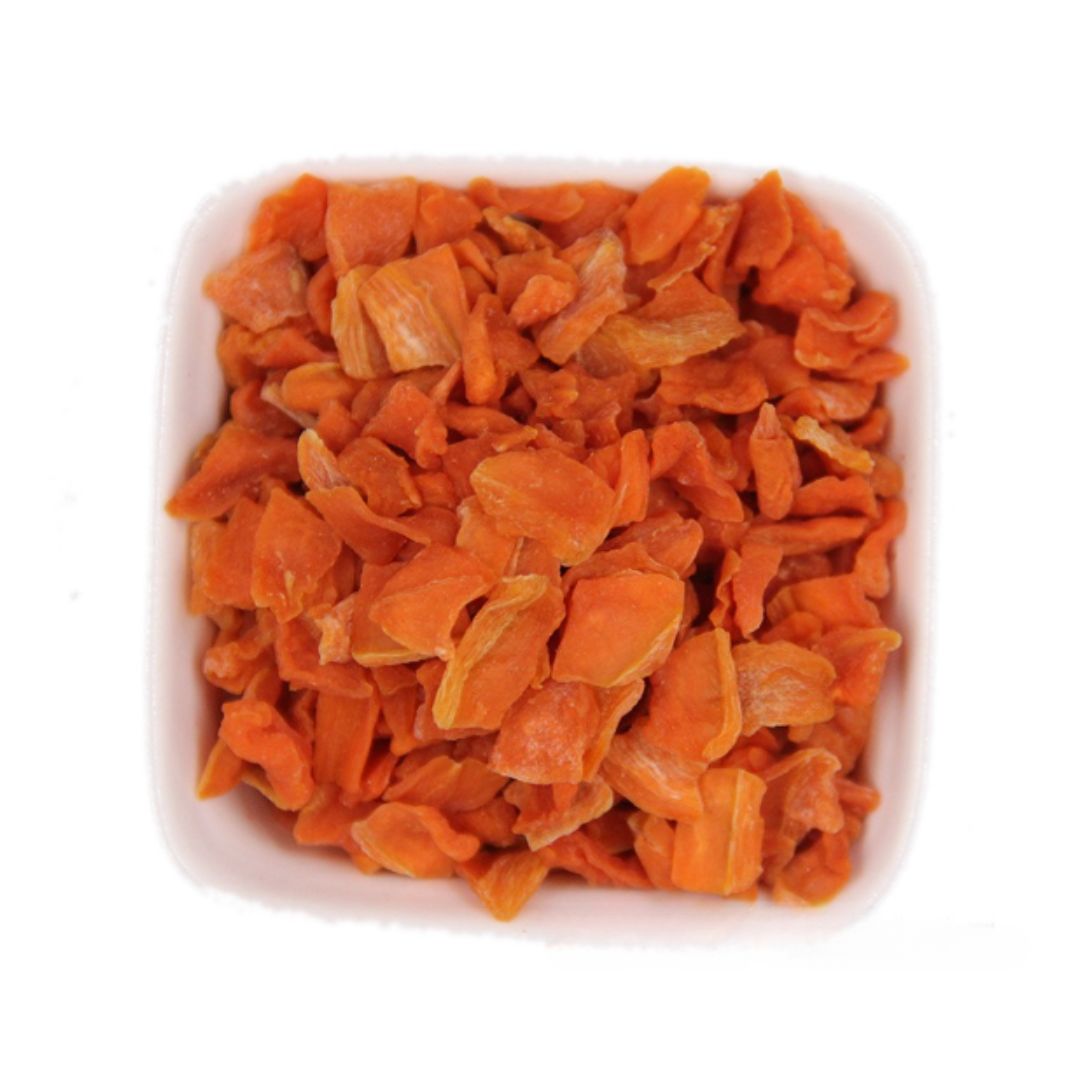
Dehydrated carrot diced products are made from fresh carrots that have been washed, peeled, diced, and then dehydrated to reduce their moisture content. The dehydration process extends the shelf life of carrots, making them ideal for long-term storage and various applications in the food industry. They retain much of the original nutritional value of fresh carrots including vitamins, minerals, and dietary fiber, presenting them as a healthy ingredient option. [1] Additionally, the diced form allows for easy integration into recipes providing convenience and consistency in food preparation.
Production Process
The production of dehydrated carrot diced begins with the selection of high-quality fresh carrots. These fresh carrots are thoroughly washed to remove any dirt and debris. Following the washing stage, the carrots are peeled to remove the outer skin and then mechanically diced into uniform pieces. These diced carrots are then blanched briefly in hot water or steam. Blanching deactivates enzymes that could cause discoloration and degradation of flavor and texture during drying and storage [2].
The blanched, diced carrots are spread evenly on trays or belts and then passed through a hot air dryer. Hot air drying uses controlled temperatures, and airflow removes moisture from the carrots, typically reducing the moisture content to below 5%. The specific temperature and drying time depend on the size of the dice and the dryer's efficiency. Once dried, the carrot pieces are cooled and sorted to remove any that do not meet quality standards. Finally, the dehydrated carrot diced product is packaged in moisture-proof containers to maintain its quality and prevent rehydration.
Product Applications
Dehydrated carrot diced products are versatile ingredients used across various food sectors. They are commonly added to dry soup mixes, instant noodle products, and ready-to-eat meals. They provide flavor, color, and nutritional value to these products. In the snack food industry, dehydrated carrot dice can be included in vegetable snack mixes, offering a healthy and convenient snack option [3].
For the food service industry, rehydrated carrot dice can be added to stews, casseroles, and sauces with minimal preparation time. They are also used in the production of pet food, adding fiber and nutrients to animal diets [4]. Additionally, the dehydrated form is valuable in remote locations or during emergencies, where access to fresh produce may be limited.
Packaging and Storage
Packaging is critical for maintaining the quality and extending the shelf life of dehydrated carrot diced products. The product should be packaged in airtight containers made from materials that provide a barrier against moisture, oxygen, and light [5]. Common packaging materials include sealed plastic bags, rigid plastic containers, and multilayered packaging films. Nitrogen flushing may be used to remove oxygen from the packaging, further preventing oxidation and maintaining product quality.
Storage conditions are equally important. Dehydrated carrot diced should be stored in a cool, dry, and dark environment. The ideal storage temperature is below 70°F (21°C) with relative humidity below 65% [6]. Exposure to heat, moisture, and light can lead to quality degradation, including loss of color, flavor, and nutritional content. When stored properly, dehydrated carrot dice can maintain their quality for up to 12-18 months.
Citations:
[1] Raudel, A., Relkin, O., & de Lamballerie, M. (2018). Impact of dehydration on vitamins and antioxidants of foods. Comprehensive Reviews in Food Science and Food Safety, 17(4), 959-978.
[2] Fellows, P. J. (2009). Food processing technology: Principles and practice. Woodhead Publishing.
[3] Sharma, A., Gujral, H. S., & Gill, B. S. (2022). Development and quality evaluation of dehydrated vegetable snacks. Journal of Food Science and Technology, 59(7), 2686-2695.
[4] Murray, S. M., Flickinger, E. A., Patil, A. R., Merchen, N. R., & Fahey, G. C., Jr. (1999). Effects of dietary fiber source on nutrient digestibility, fecal characteristics, and intestinal microbial populations in adult cats. Journal of Animal Science, 77(9), 2179-2186.
[5] Robertson, G. L. (2013). Food packaging: Principles and practice. CRC press.
[6] Singh, A., Sharma, S., & Gill, B. S. (2021). Effect of storage conditions on the quality of dehydrated vegetables. Journal of Stored Products Research, 93, 101831.

As a sales manager, I’m here to make sure you get exactly what you need for your dietary supplements. From sourcing to delivery, I’m always by your side, ensuring smooth and friendly service. Let’s make your products even better! 🥰🌿