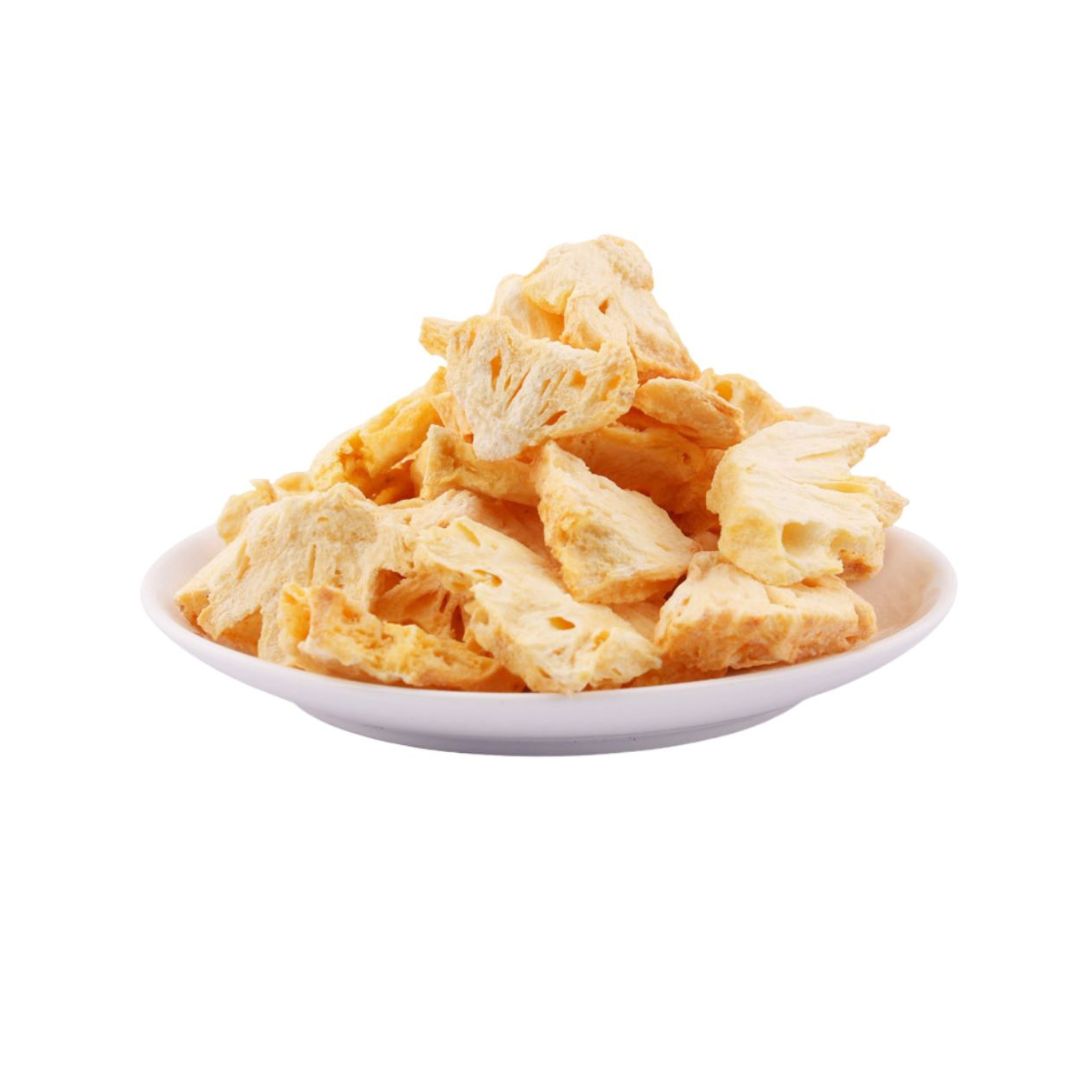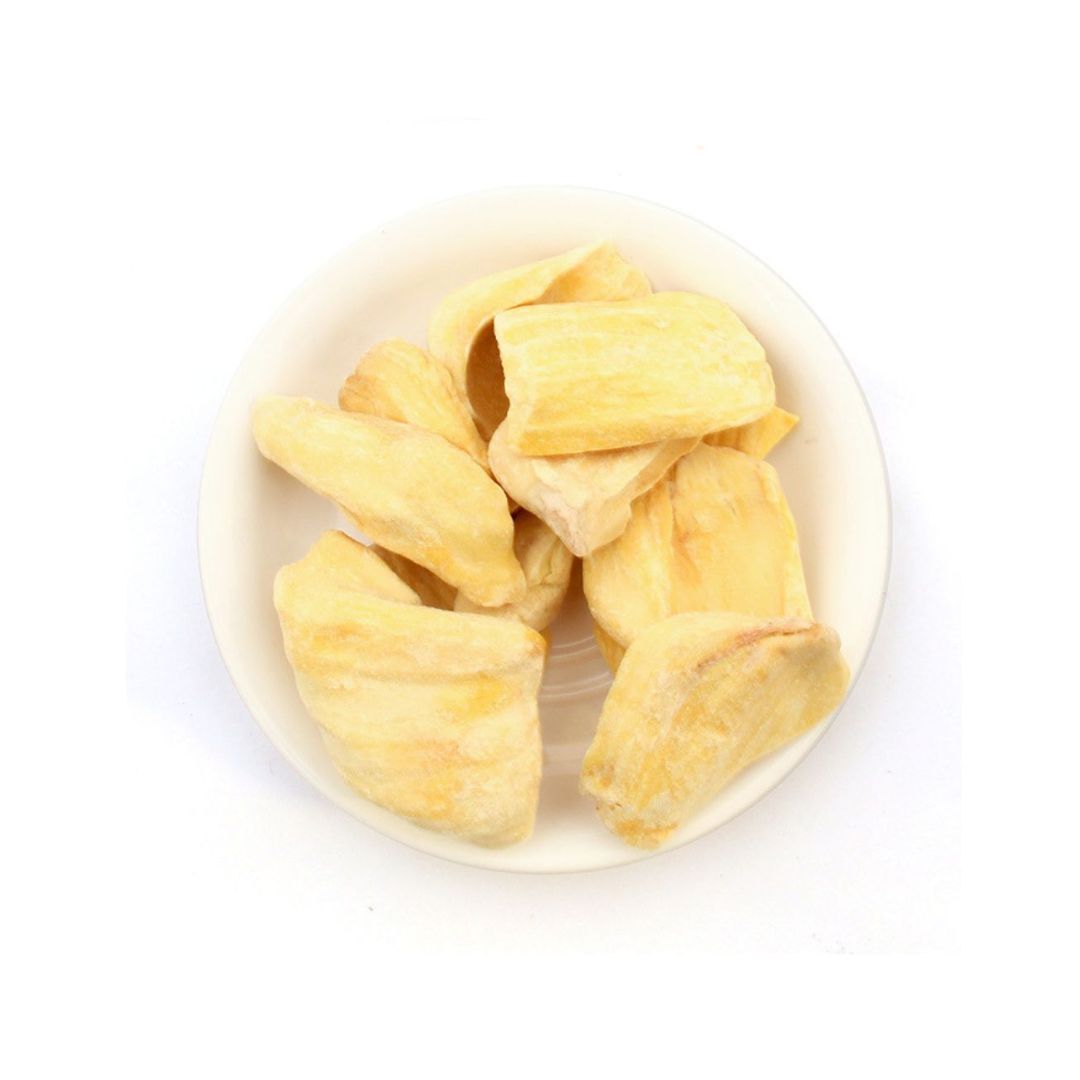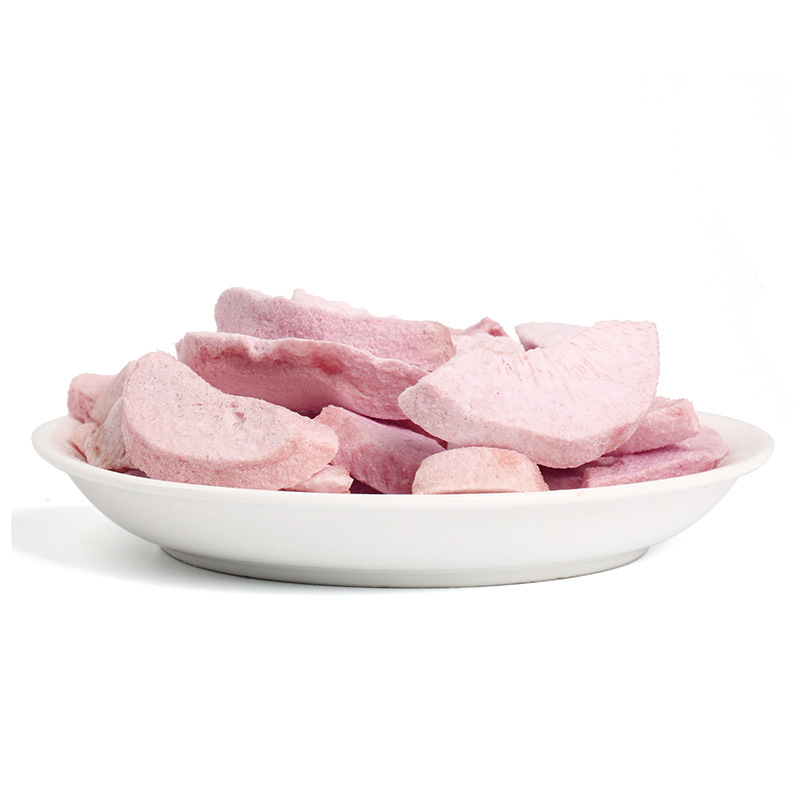


Product Introduction
Freeze-dried sugared white peach slices offer a convenient, shelf-stable way to enjoy the flavor and nutritional benefits of white peaches, further complemented by a light sugar coating. This product combines the natural sweetness of white peaches with the preservation benefits of freeze-drying, creating a snack that is both delicious and practical. The added sugar enhances the taste, making it an appealing option for those with a sweet tooth.
Production Process
The production of freeze-dried sugared white peach slices involves several key steps, beginning with the selection of ripe white peaches, sourced from high-quality orchards. These peaches are carefully washed, pitted, and sliced to ensure uniformity. The slices are then lightly coated with sugar, and placed on trays, before being moved into a freeze-drying chamber, where they are rapidly frozen and subjected to a vacuum that removes moisture through sublimation. This process preserves the fruit's natural flavor, color, and nutrients, and the result is a crisp, lightweight slice that retains much of the original peach's goodness. Finally, the freeze-dried slices are packaged to prevent moisture reabsorption, ensuring a long shelf life and maintaining the quality of the product.
Nutritional Composition Table
While specific nutritional values can vary based on fruit origin and sugar content, freeze-dried sugared white peach slices generally retain a significant portion of the nutrients found in fresh white peaches.
| Nutrient | Approximate Value per Serving (Specific values vary) |
|---|---|
| Calories | Varies, (consider added sugar) |
| Dietary Fiber | Moderate |
| Vitamin C | Present |
| Vitamin A | Small Amount |
| Potassium | Present |
| Antioxidants | Present |
Product Benefits and Functions
Freeze-dried sugared white peach slices provide several benefits, primarily stemming from their nutritional content, as white peaches contain vitamins, minerals, and antioxidants that contribute to overall health [1]. Vitamin C, present in peaches, supports immune function and acts as an antioxidant, protecting the body against free radicals [2]. Dietary fiber aids in digestion and promotes gut health [3]. The freeze-drying process concentrates these nutrients while maintaining the fruit's inherent qualities, and the added sugar enhances the palatability of the snack, making it more appealing, particularly to children and those who prefer sweeter options.
Product Application Scenarios
Freeze-dried sugared white peach slices are versatile and can be used in various applications, such as being enjoyed as a standalone snack, offering a quick and convenient energy boost. They can also be added to breakfast cereals, granola, or yogurt to enhance flavor and nutritional value. Bakers may incorporate these slices into muffins, cakes, or cookies, while the slices can also be used as a decorative topping for desserts or as an ingredient in homemade trail mixes, offering a sweet and chewy element.
Botanical Source
White peaches, Prunus persica [4], are a variety of peach known for their pale skin and delicate, sweet flavor; they are cultivated in various regions around the world, with specific varieties adapted to different climates and growing conditions [5]. These peaches are prized for their lower acidity compared to yellow peaches, making them a popular choice for fresh consumption and processing into various products.
Packaging and Storage
Freeze-dried sugared white peach slices are typically packaged in airtight, resealable bags or containers to prevent moisture absorption and maintain their crisp texture. To ensure optimal quality and extend shelf life, the product should be stored in a cool, dry place, away from direct sunlight and extreme temperatures. Proper storage helps prevent the slices from becoming sticky or losing their flavor, preserving their quality for an extended period.
Citations:
[1] Lobo, R. I., & Siddiq, M. (Eds.). (2017). Processing and impact on antioxidants in foods. John Wiley & Sons.
[2] Pullar, J. M., Carr, A. C., & Vissers, M. C. M. (2018). The roles of vitamin C in skin health. Nutrients, 10(8), 1208.
[3] Anderson, J. W., et al. "Health implications of dietary fiber." Nutrition Reviews 56.1 (1998): 1-18.
[4] Faust, M., & Timon, B. (1995). The peach: botany, production and uses. CAB International.
[5] Okie, W. R. (Ed.). (2008). The peach: varieties, cultivation and physiology. CABI.

As a sales manager, I’m here to make sure you get exactly what you need for your dietary supplements. From sourcing to delivery, I’m always by your side, ensuring smooth and friendly service. Let’s make your products even better! 🥰🌿