

Product Introduction
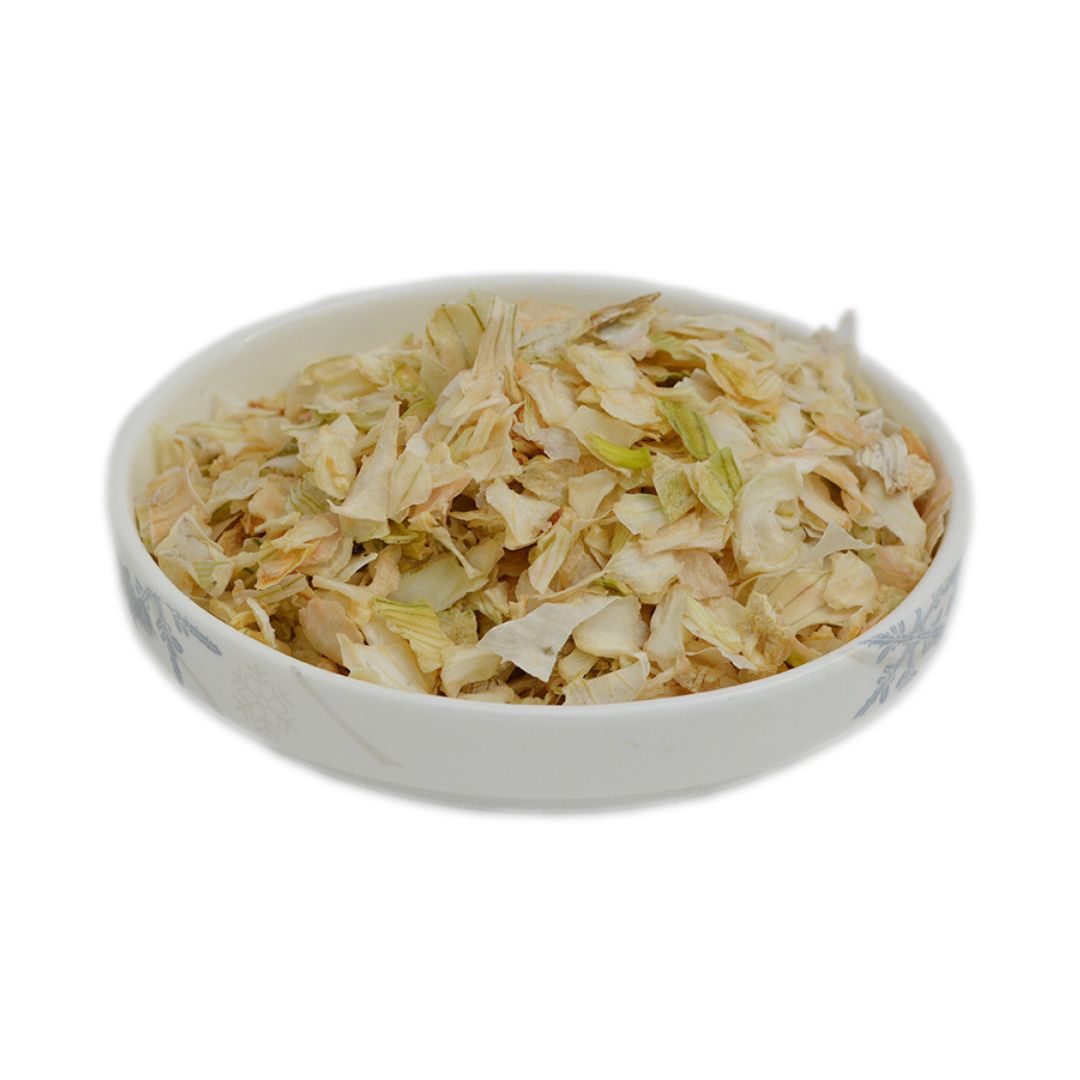
Dried onion is a dehydrated form of fresh onion Allium cepa, processed to remove moisture while retaining its characteristic flavor and aroma. It is available in various forms, including flakes, granules, and powder, offering convenience and extended shelf life compared to fresh onions. Dried onion is widely utilized in the food industry and home cooking for its ease of use and consistent flavor delivery, as well as reduction in food waste.
Production Process
The production of dried onion begins with the selection of mature, high-quality onion bulbs, which are then cleaned, topped, and peeled to remove any outer layers. The onions are then sliced or diced, depending on the desired final product form, subsequently, the sliced or diced onions are spread evenly on trays or a conveyor belt and dried using hot air drying, this process, carefully controlled, reduces the moisture content. After drying, the onion is sorted to remove any discolored or substandard pieces, the dried onion may then be milled or ground into granules or powder. Finally, testing is conducted to ensure adherence to quality and safety standards, afterwhich, the dried onion is packaged in a moisture-proof container, ready for distribution.
Product Applications
Dried onion is a common ingredient that can be found in many food products due to its concentrated flavor and convenience. In the culinary industry, it is a key component of dry soup mixes, seasoning blends, sauces, and ready-to-eat meals because it provides a consistent and robust onion flavor, improving the overall taste profile. In meat processing, dried onion is utilized in sausages, burgers, and dry rubs to add savory notes. Furthermore, in snack food production, it’s included in dips, dressings, and baked goods, enhancing their taste and aroma. Finally, home cooks appreciate dried onion for its ease of use and long shelf life, making it a practical ingredient.
Packaging and Storage
The packaging of dried onion is crucial for maintaining its quality and preventing moisture absorption, and it is typically packaged in multi-layer packaging such as sealed plastic bags, foil pouches, or airtight containers to provide a barrier against moisture and air. Packaging materials comply with food safety standards, ensuring that the product is protected from contamination. Proper labeling includes the product name, net weight, ingredient list, date of manufacture, expiration date, and storage instructions, additionally, dried onion should be stored in a cool, dry place away from direct sunlight and heat sources, with optimal storage temperatures are below 70°F (21°C) and relative humidity below 65%.
Citations
- Sharma, H. K., & Kumar, K. (2016). Dehydration of foods. Reference Module in Food Science.
- Mujumdar, A. S. (2006). Handbook of industrial drying. CRC press.
- Ozdemir, M., & Devres, O. (1999). Drying of foods. In Drying technology in food processing (pp. 1-42). CRC press.

As a sales manager, I’m here to make sure you get exactly what you need for your dietary supplements. From sourcing to delivery, I’m always by your side, ensuring smooth and friendly service. Let’s make your products even better! 🥰🌿