

Product Introduction
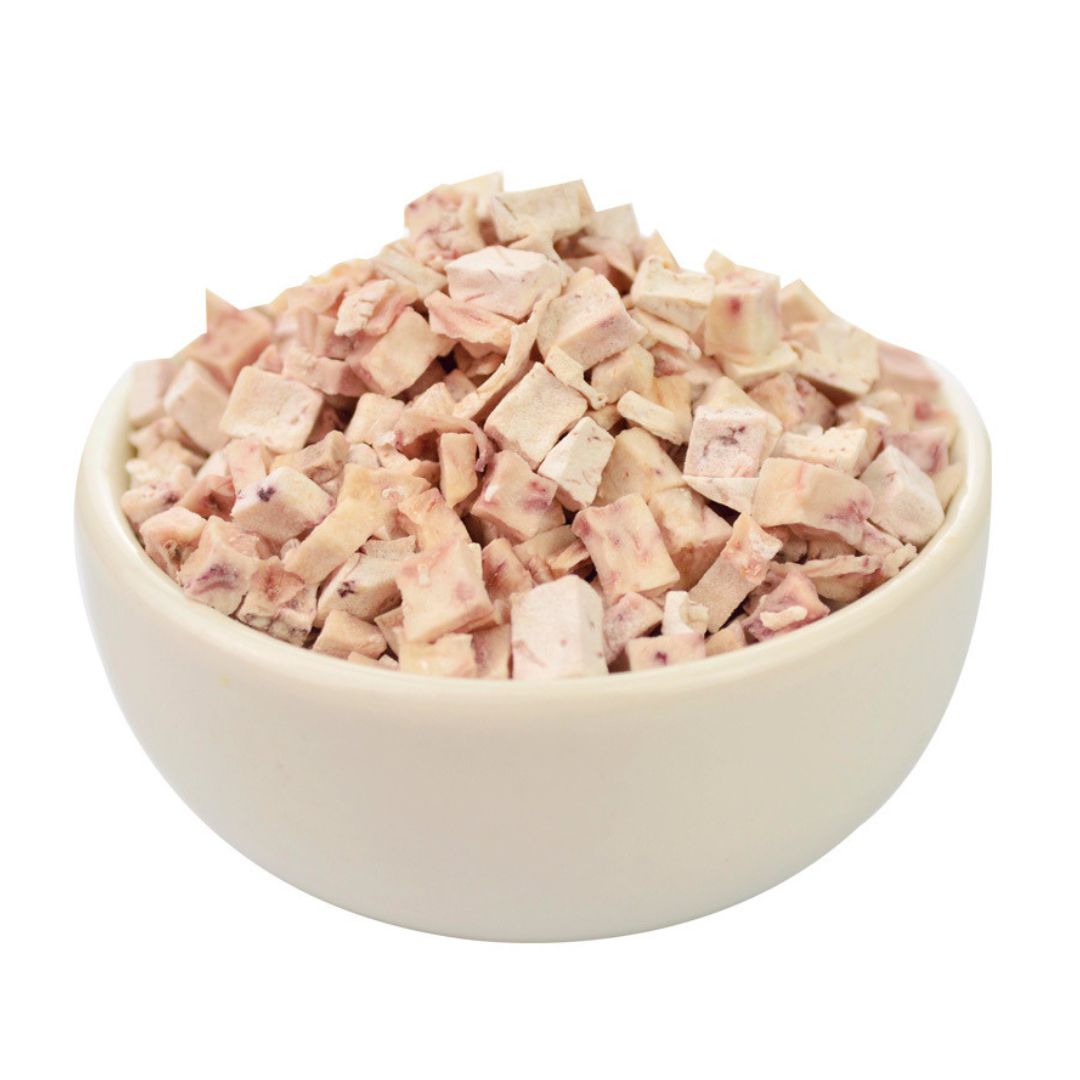
Dried taro consists of taro root, scientifically known as Colocasia esculenta, that has undergone a dehydration process. Taro is a staple food in many tropical and subtropical regions, and it provides an economically significant source of carbohydrates, and other nutrients [1]. The process of drying taro enhances its shelf life, reduces its weight for easier transportation, and concentrates its flavor. Taro's unique texture, along with its mildly sweet, nutty flavor, makes it a versatile ingredient in various culinary applications. Additionally, because it is naturally gluten-free, dried taro is also suitable for specialized diets and food products catering to individuals with gluten sensitivities.
Production Process
The production of dried taro involves selecting mature taro roots, cleaning them thoroughly to remove any soil or debris, and then peeling the outer skin. After peeling, the taro corms are typically sliced, diced, or shredded, depending on the desired final product form. These prepared pieces are then blanched to inactivate enzymes that could cause discoloration or affect the flavor and texture during drying [2].
The drying process itself can vary, with several methods employed: air-drying, oven-drying, vacuum-drying, and freeze-drying. Air-drying and oven-drying are the most traditional, but they can result in a loss of flavor and nutrients, and can cause the product to be less appealing in color. Vacuum-drying and freeze-drying methods—although more expensive—generally preserve more of the taro’s original flavor, color, and nutritional value [3].
Following drying, the taro pieces are inspected for quality to ensure consistent size, moisture content, and absence of contaminants. Moisture content is crucial, because too much moisture can lead to microbial growth and spoilage, whereas too little can affect the texture and rehydration properties [4]. Finally, the dried taro is packaged in airtight containers with moisture barriers to maintain its dryness and freshness throughout its shelf life.
Product Applications
Dried taro is utilized across a spectrum of food applications, and its versatility makes it a valuable ingredient for both home cooks, and industrial food manufacturers. In snack foods, dried taro can be made into chips, offering a healthier alternative to potato chips, and other processed snacks [5]. The dried flakes or powders can also be incorporated into baked goods like breads, muffins, and cakes, to impart a subtle sweetness and unique texture. It serves as a gluten-free flour alternative for individuals with celiac disease, or gluten intolerance.
Dried taro is also a common ingredient in soups, stews, and curries, particularly in Asian and Pacific Islander cuisines. When rehydrated, it adds a creamy texture and a slightly sweet, earthy flavor to these dishes. The food industry also utilizes dried taro as a thickener, and a stabilizer in processed foods such as sauces, and gravies. Besides food, dried taro finds applications in the cosmetic industry, where its starch is used in products like facial masks, and scrubs, for its skin-soothing properties [6].
Packaging and Storage
Proper packaging and storage are essential to maintaining the quality and shelf life of dried taro. Typically, dried taro is packaged in airtight, moisture-proof containers. These containers are designed to protect the product from environmental elements like humidity, oxygen, and light, all of which can degrade the product over time [7]. Materials such as multi-layer plastic films, vacuum-sealed bags, and resealable pouches are commonly used to ensure the product remains dry, and free from contamination.
For optimal storage, dried taro should be kept in a cool, dry, and dark place. Temperatures between 15°C and 20°C (59°F and 68°F) are ideal. Exposure to heat, moisture, or direct sunlight can lead to the development of mold, bacterial growth, or loss of flavor and nutritional content [8]. Consumers are advised to reseal the packaging tightly after each use, and to avoid storing the product near strong-smelling foods, as dried taro can absorb odors. When stored correctly, dried taro can maintain its quality for up to 12-18 months.
Citations
[1] Lebot, V. (2009). Taro.* Colocasia esculenta* (L.) Schott. Genetic Resources, Chromosome Engineering, and Crop Improvement, 6, 529-636.
[2] Fellows, P. (2009). Food processing technology: Principles and practice. Woodhead Publishing.
[3] Ratti, C. (2001). Advances in food dehydration. Trends in Food Science & Technology, 12(8), 288-298.
[4] Rahman, M. S. (2007). Food preservation by drying. CRC press.
[5] Shrestha, A. K., & Regmi, R. (2022). Taro chips. * மதிப்பு*.
[6] Huang, S. C., Tsai, M. L., Chu, Y. L., Pan, S. F., & Tsai, P. J. (2013). Anti-inflammatory and anti-allergic effects of taro (Colocasia esculenta L.) corm in vitro and in vivo. *Journal of medicinal food*, *16*(4), 333-339.
[7] Robertson, G. L. (2013). *Food packaging: principles and practice*. CRC press.
[8] Singh, A., Gaikwad, K., & Sharma, A. (2022). Food Storage. *Food Processing and Preservation*, 175-193.

As a sales manager, I’m here to make sure you get exactly what you need for your dietary supplements. From sourcing to delivery, I’m always by your side, ensuring smooth and friendly service. Let’s make your products even better! 🥰🌿