

Product Introduction
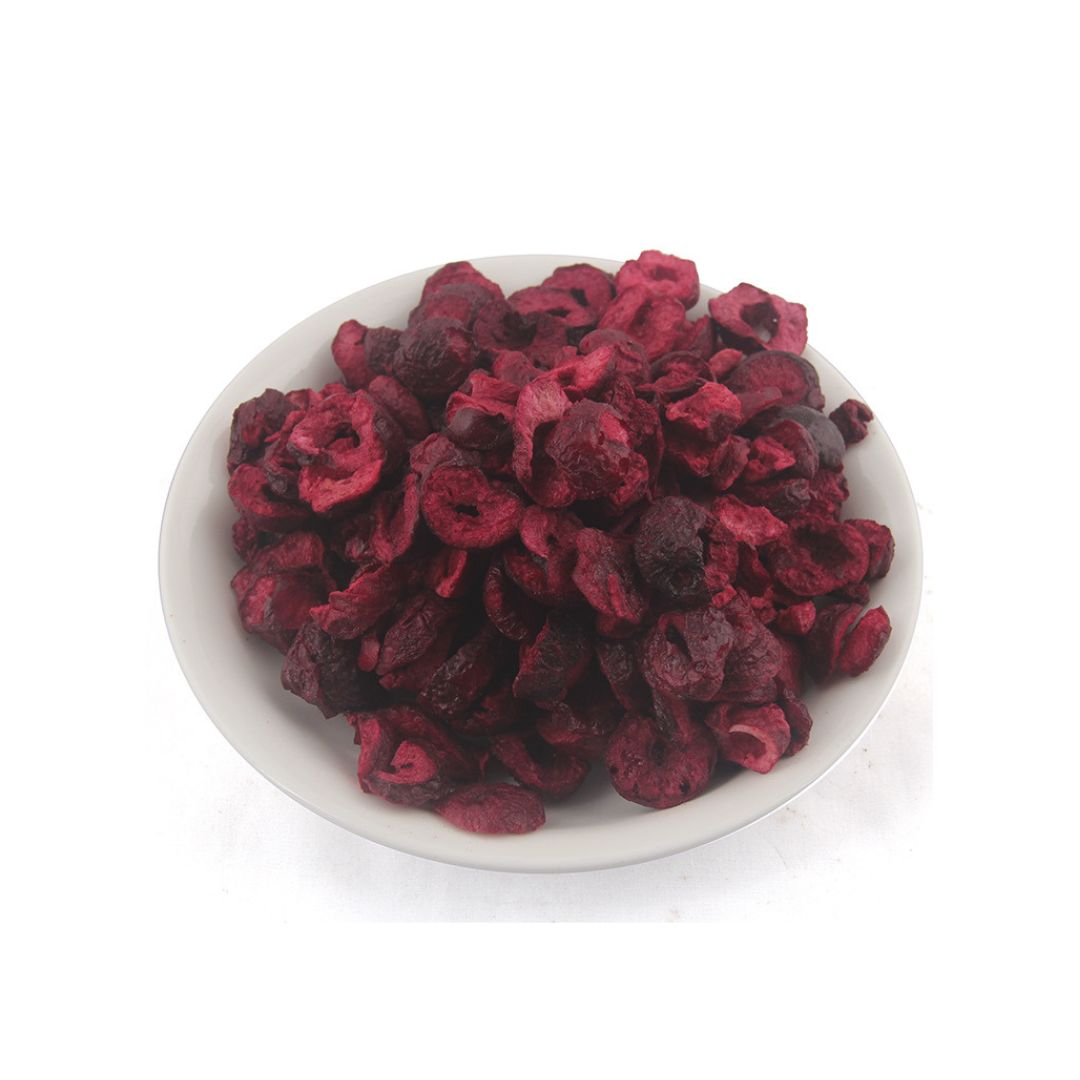
Freeze-dried cherry slices are made from fresh, high-quality cherries that have undergone a freeze-drying process to remove moisture while retaining the fruit's natural flavor, color, and nutritional value. The result is a lightweight, crispy snack that offers the concentrated taste of cherries in a convenient form. These slices are perfect for on-the-go consumption, adding to recipes, or as a healthy alternative to sugary snacks.
Production Process
The production of freeze-dried cherry slices involves several key steps. First, the fresh cherries are carefully selected, washed, and pitted. Next, they are sliced to ensure uniform drying. The slices are then frozen rapidly to very low temperatures. Once frozen, the cherries are placed in a freeze-drying chamber where the water is removed through a process called sublimation, which transforms the ice directly into vapor under vacuum conditions [1]. This method preserves the cellular structure of the fruit, maintaining its original flavor and nutrients. Finally, the freeze-dried cherry slices are packaged to protect them from moisture and air, ensuring a long shelf life.
Nutritional Composition Table
Typical nutritional values per 100g of freeze-dried cherry slices:
| Nutrient | Amount |
|---|---|
| Calories | 340 |
| Carbohydrates | 80g |
| Fiber | 10g |
| Sugars | 60g |
| Protein | 5g |
| Vitamin C | 15mg |
| Potassium | 500mg |
| Antioxidants (e.g., Anthocyanins) | Varies based on cherry variety |
Note: Nutritional values may vary based on the specific variety and processing methods.
Product Benefits and Functions
Freeze-dried cherry slices offer several health benefits. Cherries are rich in antioxidants, particularly anthocyanins, which help combat oxidative stress and reduce inflammation in the body [2]. These compounds are associated with a lower risk of chronic diseases, such as heart disease and arthritis [3]. The high fiber content aids in digestion and promotes gut health. Cherries also contain vitamins and minerals like vitamin C and potassium, which support immune function and maintain healthy blood pressure [4]. Furthermore, studies suggest that cherries can improve sleep quality due to their natural melatonin content [5].
Product Application Scenarios
Freeze-dried cherry slices can be used in various applications. They make an excellent standalone snack, offering a healthy and flavorful alternative to processed snacks. They can be added to breakfast cereals, granola, or yogurt for an extra boost of flavor and nutrition. In baking, they can be incorporated into muffins, cakes, and cookies. The slices also work well in trail mixes, salads, and as a garnish for desserts. Their concentrated flavor enhances both sweet and savory dishes.
Botanical Source
The cherries used for freeze-dried slices primarily come from the species Prunus avium, commonly known as the sweet cherry tree. This tree is native to parts of Europe and Asia and is widely cultivated in temperate regions around the world, including North America [6]. Different varieties of sweet cherries are used, each offering unique flavor profiles and nutritional compositions. The selection of specific cherry varieties depends on factors such as taste, size, and suitability for the freeze-drying process.
Packaging and Storage
Freeze-dried cherry slices are typically packaged in airtight, resealable bags or containers to prevent moisture absorption and maintain their crisp texture. The packaging material is usually designed to protect the product from light and air, which can degrade its quality. It is important to store the product in a cool, dry, and dark place to maximize its shelf life. Properly stored, freeze-dried cherry slices can last for several months to years without significant loss of flavor or nutritional value.
Citations:
[1] Ratti, M. (2001). Advances in freeze-drying. Innovative Food Science & Emerging Technologies, 2(2), 81-91.
[2] Kelley, D. S., Adkins, Y., Laugero, K. D., & et al. (2006). A review of the health benefits of cherries. Nutrients, 2(4), 368-374.
[3] Zhang, Y., Neogi, T., Chen, C., Chaisson, C., Hunter, D. J., & Choi, H. (2012). Cherry consumption and decreased risk of recurrent gout attacks. Arthritis & Rheumatism, 64(12), 1229-1236.
[4] USDA FoodData Central. (n.d.). Cherries, raw.
[5] Howatson, G., Bell, P. G., Tallent, J., Middleton, B., McHugh, M. P., & Ellis, J. (2012). Effect of tart cherry juice (Prunus cerasus) on melatonin levels and enhanced sleep duration and quality. European Journal of Nutrition, 51(8), 909-916.
[6] Potter, D., Eriksson, T., Evans, R. C., Oh, S. H., Smedmark, J. E., Morgan, D. R., … & Campbell, C. S. (2007). Phylogeny and classification of Rosaceae. Plant Systematics and Evolution, 266(1-2), 5-43.

As a sales manager, I’m here to make sure you get exactly what you need for your dietary supplements. From sourcing to delivery, I’m always by your side, ensuring smooth and friendly service. Let’s make your products even better! 🥰🌿