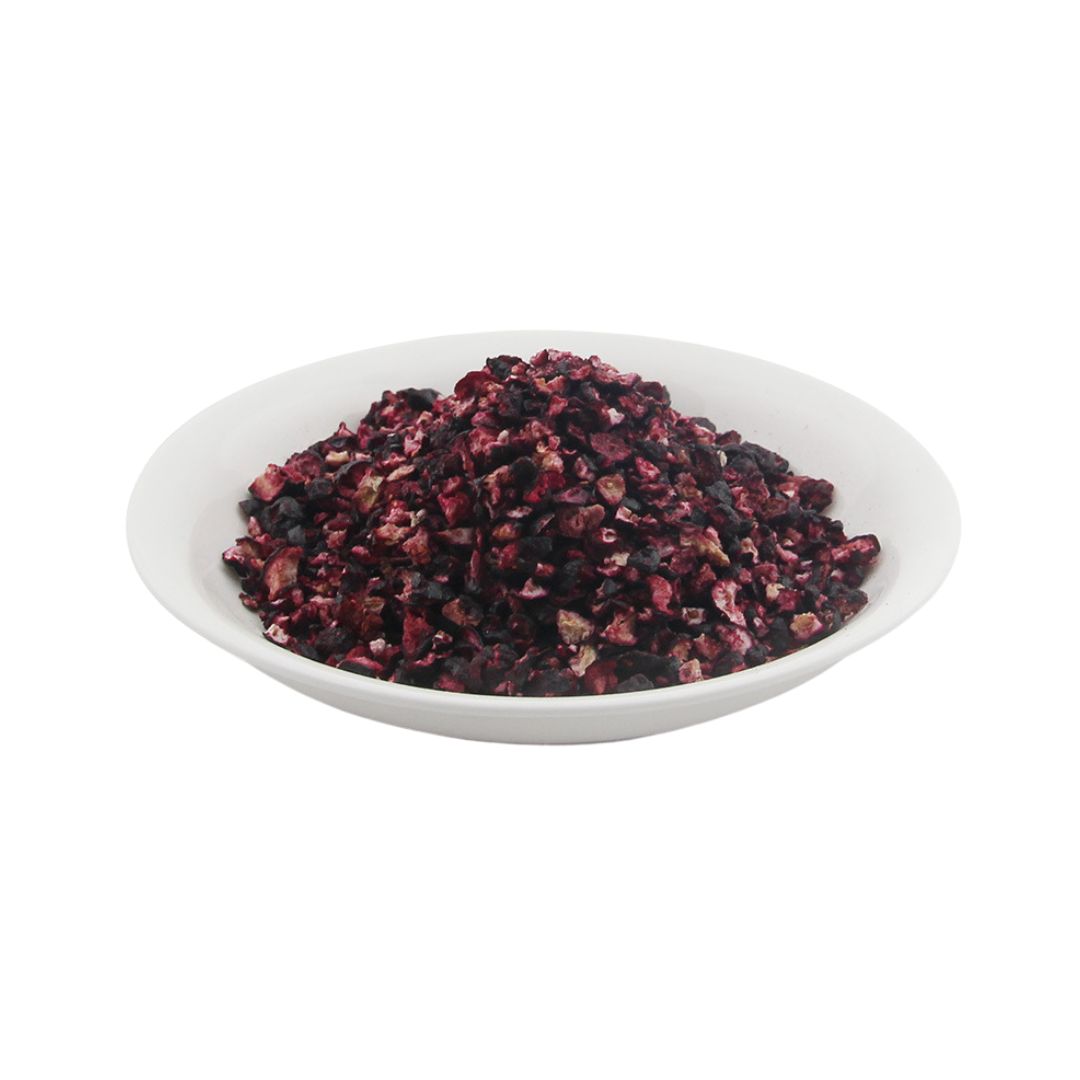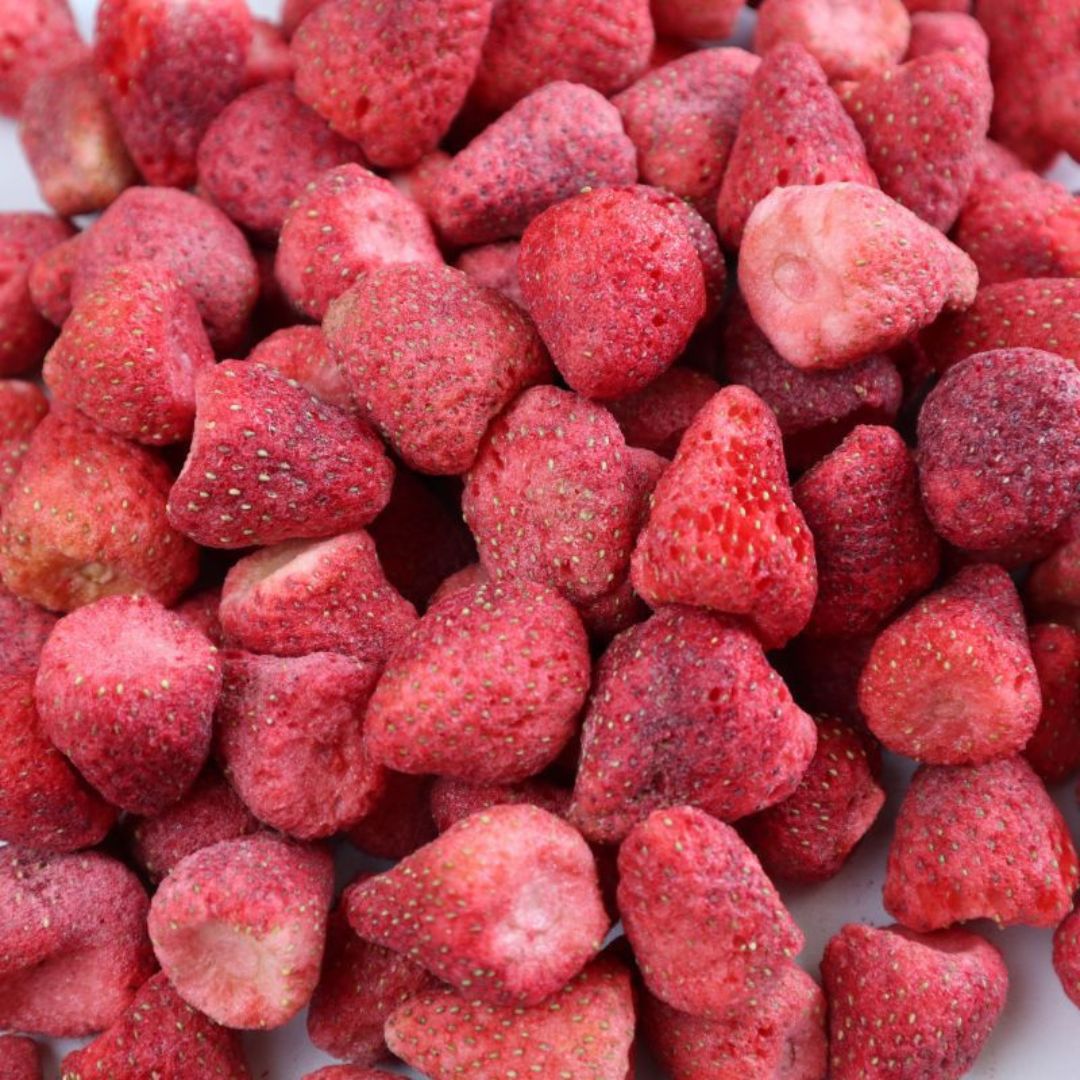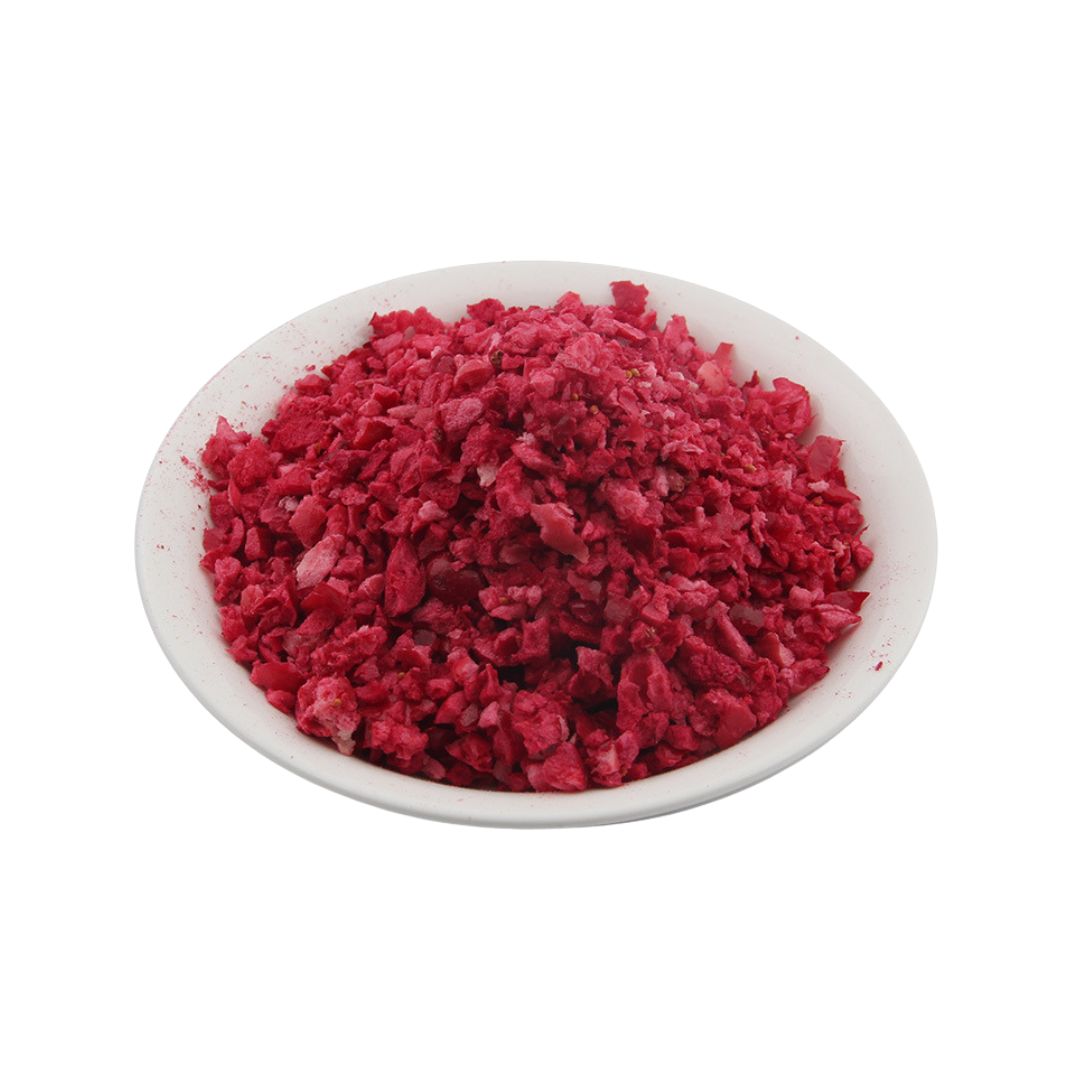


Product Introduction
Freeze-dried cranberries are made by removing water from fresh cranberries through a freeze-drying process. This process, also known as lyophilization, preserves the natural flavor, color, and nutritional content of the fruit. Freeze-dried cranberries offer a longer shelf life compared to fresh cranberries, making them a convenient ingredient and snack option. The low moisture content in freeze-dried cranberries also inhibits microbial growth, ensuring the product remains safe for consumption over an extended period. They can be used in a variety of applications, from baking to snacking.
Production Process
The production of freeze-dried cranberries involves several key steps to ensure high-quality preservation. First, fresh cranberries are harvested and cleaned to remove any impurities. Next, the cranberries are pre-treated, which may include washing and sometimes slicing to improve the efficiency of the freeze-drying process. The cranberries are then placed on trays and frozen at very low temperatures, typically around -40°C. Once frozen, the trays are moved into a vacuum chamber where the freeze-drying process takes place.
During freeze-drying, the frozen water in the cranberries sublimates, meaning it transitions directly from a solid to a gas, bypassing the liquid phase. This sublimation occurs under vacuum conditions, which lowers the pressure and speeds up the drying process. The entire freeze-drying process can take anywhere from 12 to 24 hours, depending on the equipment and specific product requirements. After freeze-drying, the cranberries are packaged in airtight containers to prevent moisture reabsorption, ensuring the product remains shelf-stable and retains its quality.
Nutritional Composition Table
Below is an overview of the nutritional composition of freeze-dried cranberries per 100g serving:
| Nutrient | Amount |
|---|---|
| Calories | 308 kcal |
| Total Fat | 1.4 g |
| Saturated Fat | 0.1 g |
| Trans Fat | 0 g |
| Cholesterol | 0 mg |
| Sodium | 3 mg |
| Total Carbohydrate | 77 g |
| Dietary Fiber | 12 g |
| Total Sugars | 60 g |
| Protein | 2.5 g |
| Vitamin C | 14 mg |
| Vitamin E | 1.2 mg |
| Vitamin K | 5 mcg |
| Manganese | 0.8 mg |
| Copper | 0.1 mg |
Note: Nutritional values may slightly vary based on specific product and processing methods.
Product Benefits and Functions
Freeze-dried cranberries offer several health benefits due to their rich nutritional profile. They are well known for supporting urinary tract health. Cranberries contain compounds called proanthocyanidins (PACs), which can help prevent bacteria from adhering to the walls of the urinary tract, reducing the risk of urinary tract infections (UTIs).[1] These PACs are particularly effective against E. coli, one of the most common bacteria responsible for UTIs.[2]
In addition to urinary tract health, freeze-dried cranberries are packed with antioxidants. Antioxidants help protect the body against free radicals, which are unstable molecules that can damage cells and contribute to aging and various diseases.[3] The antioxidants in cranberries, like flavonoids and phenolic acids, can neutralize these free radicals, reducing oxidative stress and promoting overall health.[4] The fiber content in freeze-dried cranberries aids in digestive health by promoting regular bowel movements and supporting a healthy gut microbiome.[5]
Product Application Scenarios
Freeze-dried cranberries are versatile and can be used in a variety of culinary applications. They make a healthy and convenient snack, which can be consumed directly from the package. They are often added to trail mixes, combining them with nuts, seeds, and other dried fruits for an energy-boosting snack.
In baking, freeze-dried cranberries can be incorporated into muffins, cookies, and breads, adding a tangy and slightly sweet flavor. They can also be used as a topping for yogurt, oatmeal, and breakfast cereals, enhancing the nutritional value and taste. Furthermore, freeze-dried cranberries can be rehydrated and used in sauces, jams, and compotes. They provide a vibrant color and unique taste to both sweet and savory dishes.
Botanical Source
Cranberries (Vaccinium macrocarpon) are native to North America. These evergreen dwarf shrubs or trailing vines belong to the Ericaceae family. Cranberries typically grow in acidic bogs and wetlands. These plants produce small, pink flowers in the spring, which develop into the bright red berries harvested in the fall.
The cultivation of cranberries involves managing water levels in the bogs, controlling weeds, and protecting the plants from pests and diseases. Harvesting methods vary, with some growers using wet harvesting techniques, where the bogs are flooded and the floating berries are collected. Other growers use dry harvesting methods, where the berries are picked from the vines using mechanical harvesters.
Packaging and Storage
Proper packaging and storage are crucial for maintaining the quality. Freeze-dried cranberries are typically packaged in airtight, moisture-proof containers. These containers prevent the reabsorption of moisture, which could cause the cranberries to lose their crisp texture and potentially spoil. Common packaging materials include sealed bags, jars, and containers made from materials like plastic or glass.
For optimal storage, freeze-dried cranberries should be kept in a cool, dry place away from direct sunlight and heat. The ideal storage temperature is between 15°C and 25°C. Avoid storing them in areas with high humidity, such as near sinks or stoves. If stored properly, freeze-dried cranberries can maintain their quality for up to 12 to 18 months. Once the packaging is opened, it is important to reseal it tightly after each use to minimize exposure to air and moisture.
Citations:
- Blumberg, J. B., Camesano, T. A., Manach, C., Howell, A. B., Rohdewald, P., & Mazza, G. (2013). Cranberries and their bioactive constituents in human health. Advances in Nutrition, 4(6), 618-632.
- Howell, A. B., Vorsa, N., et al. (2005). Inhibition of adherence of Escherichia coli to uroepithelial-cell surfaces by proanthocyanidin extracts from cranberries. New England Journal of Medicine, 352(8), 805-810.
- Lobo, V., Patil, A., Phatak, A., & Chandra, N. (2010). Free radicals, antioxidants and functional foods: Impact on human health. Pharmacognosy Reviews, 4(8), 118-126.
- Prior, R. L. (2004). Oxygen radical absorbance capacity (ORAC): New horizons in relating antioxidant biology and human health. American Journal of Clinical Nutrition, 79(4), 551-552.
- Anderson, J. W., et al. (1998). Health implications of dietary fiber. Nutrition Reviews, 56(1), 1-18.

As a sales manager, I’m here to make sure you get exactly what you need for your dietary supplements. From sourcing to delivery, I’m always by your side, ensuring smooth and friendly service. Let’s make your products even better! 🥰🌿