

Product Introduction
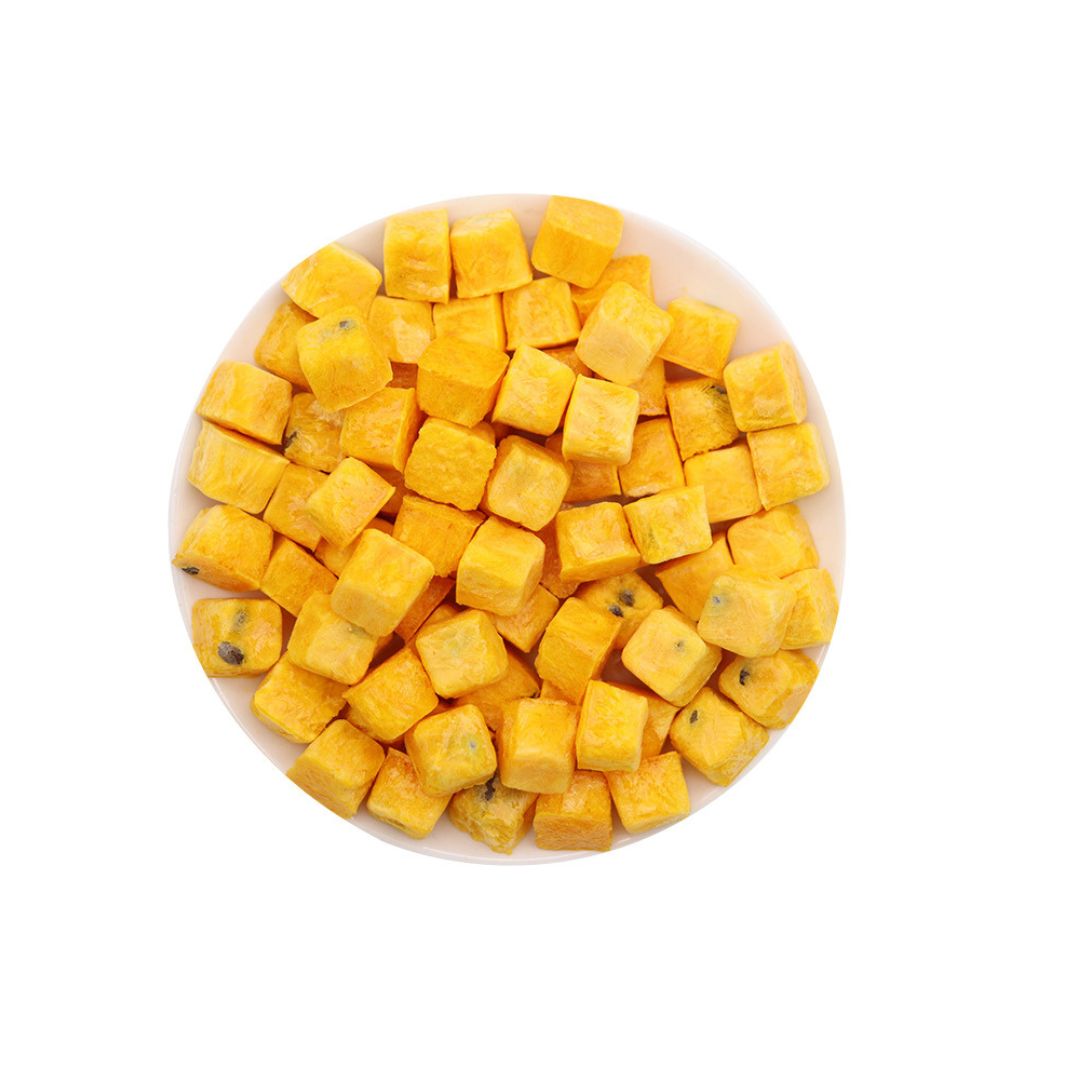
Freeze-dried passion fruit chunks retain the distinct, sweet, and tart taste of fresh passion fruit, offering a concentrated burst of flavor. The freeze-drying process preserves the fruit's natural characteristics, making it a convenient and shelf-stable option. They can be consumed directly as a snack or incorporated into various culinary applications.
Production Process
The production of freeze-dried passion fruit chunks involves several key steps. First, fresh passion fruits are selected for ripeness and quality. Next, the fruits are washed, and the pulp is extracted, often separated from the seeds or freeze-dried together, depending on preference. The pulp is then quick-frozen to very low temperatures. Following freezing, the fruit undergoes a sublimation process where the ice crystals are converted directly into vapor under a vacuum, removing moisture while maintaining the fruit’s structure and nutritional content. Finally, the freeze-dried passion fruit chunks are packaged to prevent moisture reabsorption and ensure a long shelf life.
Nutritional Composition Table
(Note: Nutritional values are approximate and can vary based on specific product and serving size. Values are per 100g and should be regarded as a general guide.)
| Nutrient | Amount (per 100g) |
|---|---|
| Calories | ~350 kcal |
| Carbohydrates | ~80g |
| Fiber | ~25g |
| Vitamin C | ~50mg |
| Potassium | ~800mg |
| Magnesium | ~60mg |
| Total Fat | ~4g |
| Protein | ~6g |
Product Benefits and Functions
Freeze-dried passion fruit chunks offer several health benefits. The high vitamin C content supports the immune system and promotes skin health through collagen production [1]. The dietary fiber aids digestion, helps regulate blood sugar levels, and contributes to feelings of fullness [2]. Passion fruit is also rich in antioxidants, which combat oxidative stress and reduce the risk of chronic diseases [3]. Additionally, the potassium and high magnesium content supports heart health and proper muscle function [4].
Product Application Scenarios
These freeze-dried chunks can be used in a variety of ways. They make an excellent snack on their own, providing a healthy alternative to processed sweets. They can be added to breakfast cereals, granola, and yogurt for an extra burst of flavor and nutrition. Moreover, they can be rehydrated and used in smoothies, desserts, sauces, and baked goods. The concentrated flavor of passion fruit also makes them suitable for flavoring teas and cocktails, bringing a tropical twist to beverages or passion fruit flavored smoothies.
Botanical Source
Passion fruit, scientifically known as Passiflora edulis, is a tropical fruit native to South America but cultivated in various tropical and subtropical regions worldwide [5]. The vine is known for its distinctive flower and flavorful fruit. There are two main types: purple and yellow, with the yellow variety being more commonly used for commercial production due to its higher yield and resilience. Passion fruit is prized for its aromatic pulp and unique sweet-tart taste, making it a favorite ingredient in cuisines around the globe.
Packaging and Storage
Freeze-dried passion fruit chunks should be packaged in airtight, moisture-proof containers to maintain their quality and prevent rehydration. Optimal storage conditions include a cool, dark, and dry environment. When stored properly, freeze-dried passion fruit chunks can have an extended shelf life, often lasting several months to a year or more. Once opened, the package should be resealed immediately to prevent exposure to humidity, which can affect the texture and flavor of the product.
Citations:
[1] Pullar, J. M., Carr, A. C., & Vissers, M. (2018). The Roles of Vitamin C in Skin Health. Nutrients, 10(8), 1229.
[2] Anderson, J. W., et al. (1998). Health implications of dietary fiber. Nutrition Reviews, 56(1), 1-18.
[3] Menaa, F., et al. (2024). Assessing the Potential of Passion Fruit Peel Extracts: Insights into Antioxidant, Anti-Inflammatory, and Anti-Aging Characteristics and Bioactive Compounds Extraction Optimization. Antioxidants, 13(2), 218.
[4] Weaver, C. M. (2013). Potassium and health. Advances in Nutrition, 4(3), 368S-377S.
[5] Morton, J. (1987). Passionfruit. In Fruits of Warm Climates. Purdue University.

As a sales manager, I’m here to make sure you get exactly what you need for your dietary supplements. From sourcing to delivery, I’m always by your side, ensuring smooth and friendly service. Let’s make your products even better! 🥰🌿